Zones #
How to interpret zones as well as sectional charts for Canada & USA.
Canadian Airspaces #
General #
Good way to remember Canadian zones:
- A - Above (18000+)
- B - Between (12500 and 18000) in most places
- C - Clearance required
- D - Direct 2 way communication
- E - Everyone
- F - Forbidden
- G - Go for it!
CANADIAN: A Zone #
- Not shown on sectional
- Not really applicable. IFR ONLY and from 18,000ft to 60,000ft$
CANADIAN: B Zone #
- Not really shown on sectional, space between 12,500ft to 18,000ft.
CANADIAN: C Zone #

-
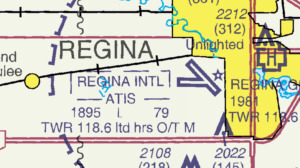
Most / all major airports (Windsor, London, Toronto, etc.)
-
ATC makes sure IFR aircraft keep distance but NOT VFR.
-
Approx 20NM: MUST communicate to tower before entering
-
Requires ATC clearance
CANADIAN: D Zone #
-
Smaller airports
-
Same rings as Class C
-
Plane separation equipment / workload permitting
-
Approx 5-15NM: MUST communicate to tower before entering
-
Requires two-way communication with ATC (not necessarily clearance)
CANADIAN: E ZONE #
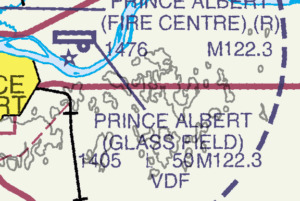
- Control zone without a tower
- Often advise on a certain frequency intentions
- Dashed line
CANADIAN: F ZONE #
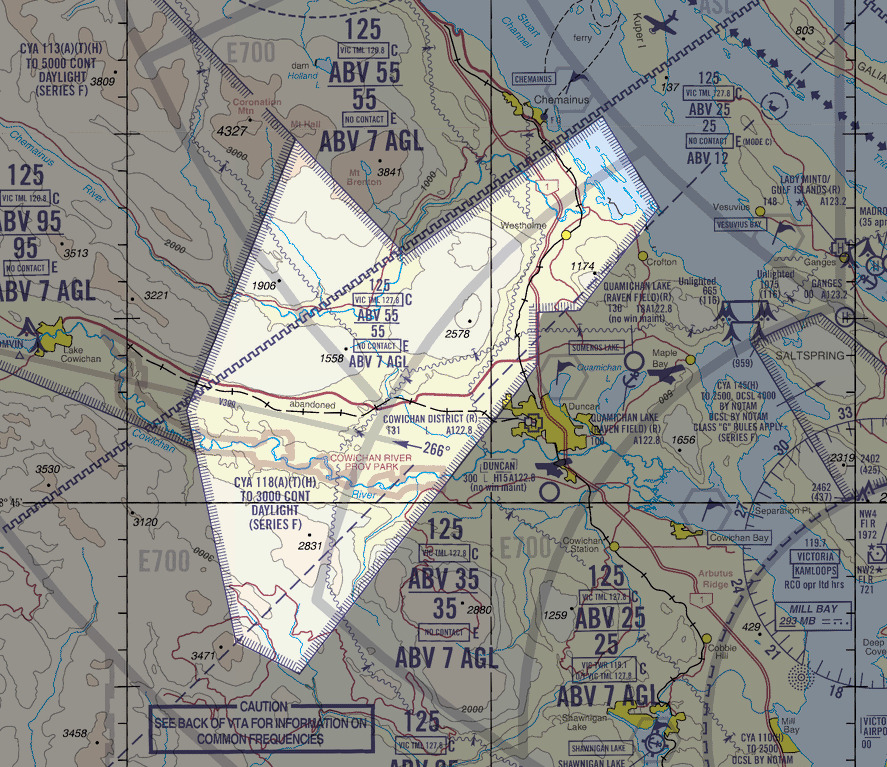
- Special use
- Restricted
- Military
American Airspaces #
AMERICAN: B ZONE #
- LARGE airports like Detroit
- Shown with large rings. Each ring has a designated number (ex. 100/40) which is from 4,000ft to 10,000ft where the zone is.
- ATC gives instructions on how to keep safe distance from other aircraft
- MUST communicate to tower before entering
- Requires ATC clearance